L'IA dans le recrutement : comment les entreprises tech recrutent mieux en 2026
L'IA ne remplace pas les recruteurs, elle change l'usage de leur temps. Comment les entreprises tech utilisent l'IA sur tout l'entonnoir de recrutement, ce que montrent les données 2025-2026, et les quatre risques à maîtriser.
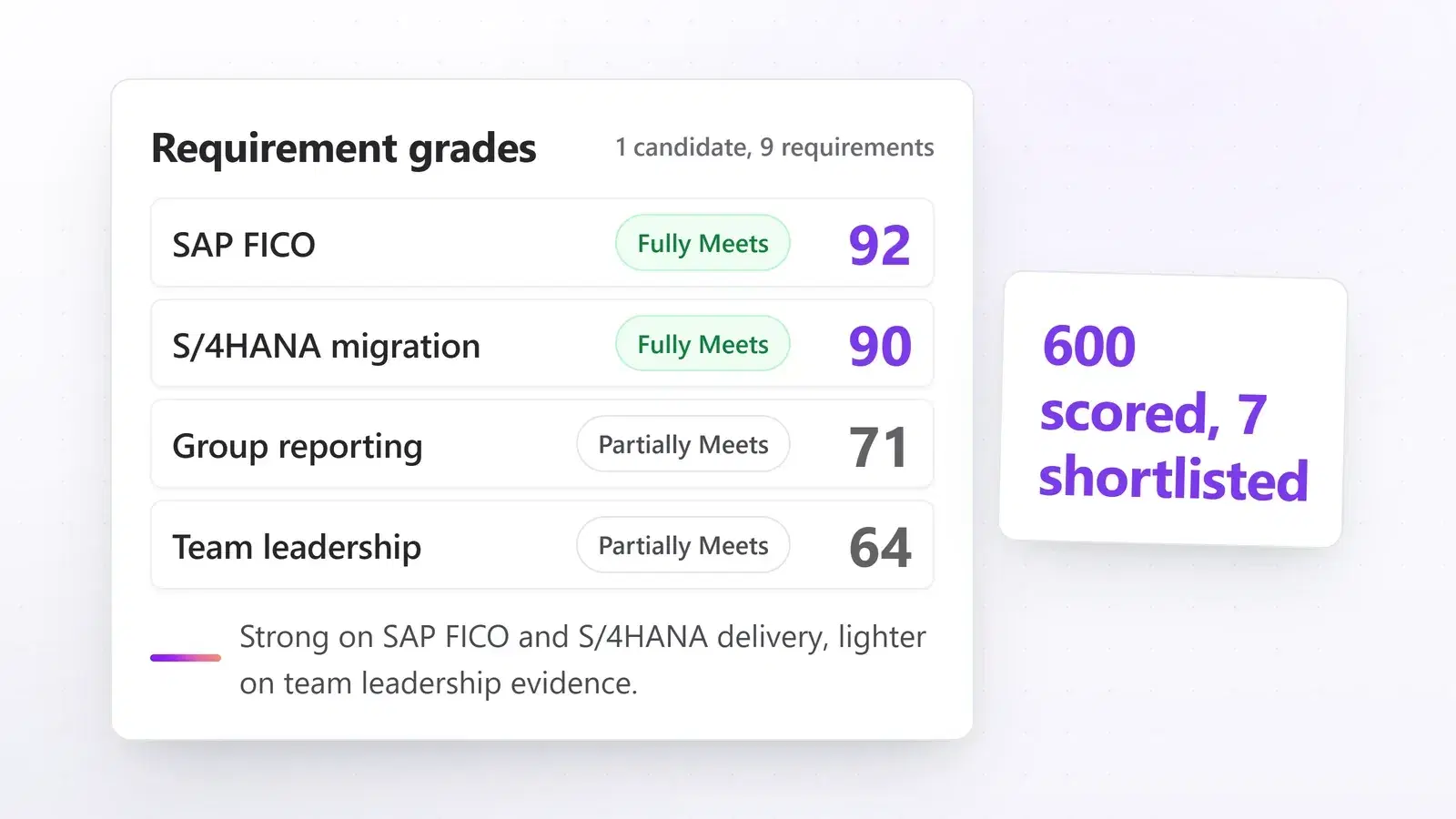
L’IA dans le recrutement ne remplace pas les recruteurs. Elle change l’usage de leur temps : moins de lecture et de tri, plus d’entretiens, d’offres et de décisions. Les entreprises tech ont adopté ce basculement les premières, et leur expérience est un aperçu utile pour tous les autres.
Dans ce guide : où l’IA apporte réellement de la valeur sur l’entonnoir de recrutement, ce que disent les données, et les quatre risques à maîtriser en 2026.
Pourquoi les entreprises tech ont adopté l’IA de recrutement les premières
Les entreprises tech fonctionnent aux décisions fondées sur les données, et la vitesse de recrutement pèse directement sur la vélocité produit et le chiffre d’affaires. Quatre pressions les ont poussées à bouger les premières :
- Le volume de candidatures. Les postes recherchés en ingénierie et en data attirent bien plus de candidatures qu’un humain ne peut en lire attentivement. LinkedIn a fait état de candidatures en hausse de plus de 45 % d’une année sur l’autre, atteignant par moments environ 11 000 candidatures par minute sur la plateforme.
- Une pénurie de talents persistante. Environ trois employeurs sur quatre déclarent avoir du mal à trouver les compétences dont ils ont besoin, ce qui récompense les équipes qui évaluent vite et bien.
- Les meilleurs candidats disparaissent en quelques jours. Les processus lents perdent les meilleurs profils au profit de concurrents plus rapides.
- Une aisance avec la technologie. Des équipes qui construisent du logiciel à longueur de journée accordent au logiciel, dans leurs propres processus, une confiance plus éclairée, et un examen plus exigeant.
La courbe d’adoption est désormais raide sur tout le marché, pas seulement dans la tech : l’étude 2025 Talent Trends de la SHRM a mesuré 43 % des organisations utilisant l’IA pour des tâches RH, contre 26 % un an plus tôt, la présélection de CV figurant parmi les premiers cas d’usage.
Où l’IA fonctionne sur l’entonnoir de recrutement
Présélection des CV et rapprochement des candidats
L’étape au levier le plus fort. L’IA lit chaque CV entrant et le note au regard des exigences du poste : les recruteurs ouvrent une présélection classée et expliquée au lieu d’une pile brute. La propriété critique à exiger ici est la transparence : un score que vous ne pouvez pas relier à des preuves est un score que vous ne pouvez pas défendre devant un responsable du recrutement ou un candidat.
Planification et communication de routine
Les assistants et les outils de messagerie automatisée absorbent les allers-retours de planification des entretiens et répondent aux questions courantes des candidats. Peu spectaculaire, et pourtant l’un des retours sur investissement les plus nets : c’est du pur temps de coordination récupéré chaque semaine.
L’évaluation à grande échelle
Une évaluation structurée et cohérente sur des milliers de candidats : c’est là que les grands employeurs mesurent les gains les plus nets. L’exemple le mieux documenté reste le programme d’évaluation assistée par IA d’Unilever, qui a réduit drastiquement le temps de recrutement tout en économisant plus d’un million de livres sterling par an. La leçon se généralise : une cohérence à une échelle qu’aucun humain ne peut tenir manuellement.
Une mise en garde s’impose ici. Certains éditeurs commercialisent des modèles censés prévoir quels candidats réussiront ou resteront sur la durée. Accueillez ces promesses avec exigence : demandez sur quelles données le modèle a été entraîné, comment la prévision est validée, et ce qu’il advient des candidats qu’il note à la baisse. Si un éditeur ne peut pas répondre, la promesse relève du marketing, pas de la mesure.
Réduire les biais inconscients, sous conditions
L’IA peut standardiser l’évaluation : mêmes critères, même pondération, appliqués à l’identique à chaque candidat. C’est une voie réelle vers un recrutement plus cohérent, mais elle est conditionnelle, pas automatique. Elle exige des données représentatives, des audits réguliers et une supervision humaine. La standardisation sans regard critique ne fait qu’automatiser les biais existants.
Mieux, pas seulement plus vite
La vitesse est le bénéfice visible ; la qualité de décision est celui qui se cumule. Le rapport 2025 Future of Recruiting de LinkedIn montre que les entreprises qui utilisent le plus la rédaction de messages assistée par IA ont 9 % de chances supplémentaires de réaliser un recrutement de qualité par rapport à celles qui l’utilisent le moins, et que 73 % des professionnels du recrutement s’accordent à dire que l’IA va changer la façon dont les entreprises recrutent.
En pratique, la division du travail est simple : l’IA prend en charge le gros œuvre des données (présélection, classement, planification), et les recruteurs consacrent le temps récupéré au jugement, aux relations et à la conclusion. La sortie de la machine est une entrée pour l’humain.
Les points de vigilance
- La confiance des candidats. Pew Research Center a mesuré que 66 % des Américains ne souhaiteraient pas postuler chez un employeur qui utilise l’IA pour aider à prendre des décisions de recrutement, et une enquête Gartner de 2025 montre que seuls 26 % des candidats font confiance à l’IA pour les évaluer équitablement. La transparence sur les étapes où l’IA intervient, et celles où l’humain prend le relais, est la réponse qui fonctionne.
- Les biais algorithmiques. Des modèles entraînés sur un historique biaisé le reproduisent. Surveillance continue, données représentatives et audits sont les parades, et au titre du règlement européen sur l’IA (l’AI Act), l’IA de recrutement est classée à haut risque, avec des obligations qui s’appliquent progressivement aux déployeurs à partir d’août 2026.
- Des candidats qui manipulent les systèmes. À mesure que la présélection s’automatise, certains candidats optimisent pour l’algorithme plutôt que pour le poste. Nous avons détaillé les cinq tactiques les plus courantes, et les défenses, dans notre article sur les candidats qui manipulent les outils de recrutement IA.
- La sur-automatisation. Retirer l’humain des décisions se retourne contre vous, auprès des candidats comme des régulateurs. Le schéma durable : les résultats de l’IA sont consultatifs, les décisions sont prises par des personnes, et les changements de statut sont consignés pour que le processus puisse être audité après coup.
L’essentiel
Les entreprises tech n’ont pas adopté l’IA de recrutement par effet de mode. Elles l’ont adoptée parce que le volume de candidatures a dépassé la lecture manuelle, et elles l’ont gardée parce qu’une présélection cohérente et expliquée a rendu leurs décisions meilleures, pas seulement plus rapides. Utilisée avec les garde-fous ci-dessus, elle fait la même chose pour toute équipe qui croule sous les candidatures.
Voyez-le en pratique
Talentino applique ce modèle de bout en bout : chaque candidat noté au regard de vos exigences, chaque score expliqué avec les preuves citées depuis le CV, et des décisions de présélection ou de rejet que vous appliquez depuis l’écran d’examen, chaque statut conservant la trace de la personne qui l’a appliqué. Commencez gratuitement, sans carte bancaire, ou réservez une démo.